



Overview
Metadata works as an editorial layer that supports the page beyond the visible content itself. It helps define how the page is read in search results, what context it communicates and why it deserves the user click.
Main fields
What to review
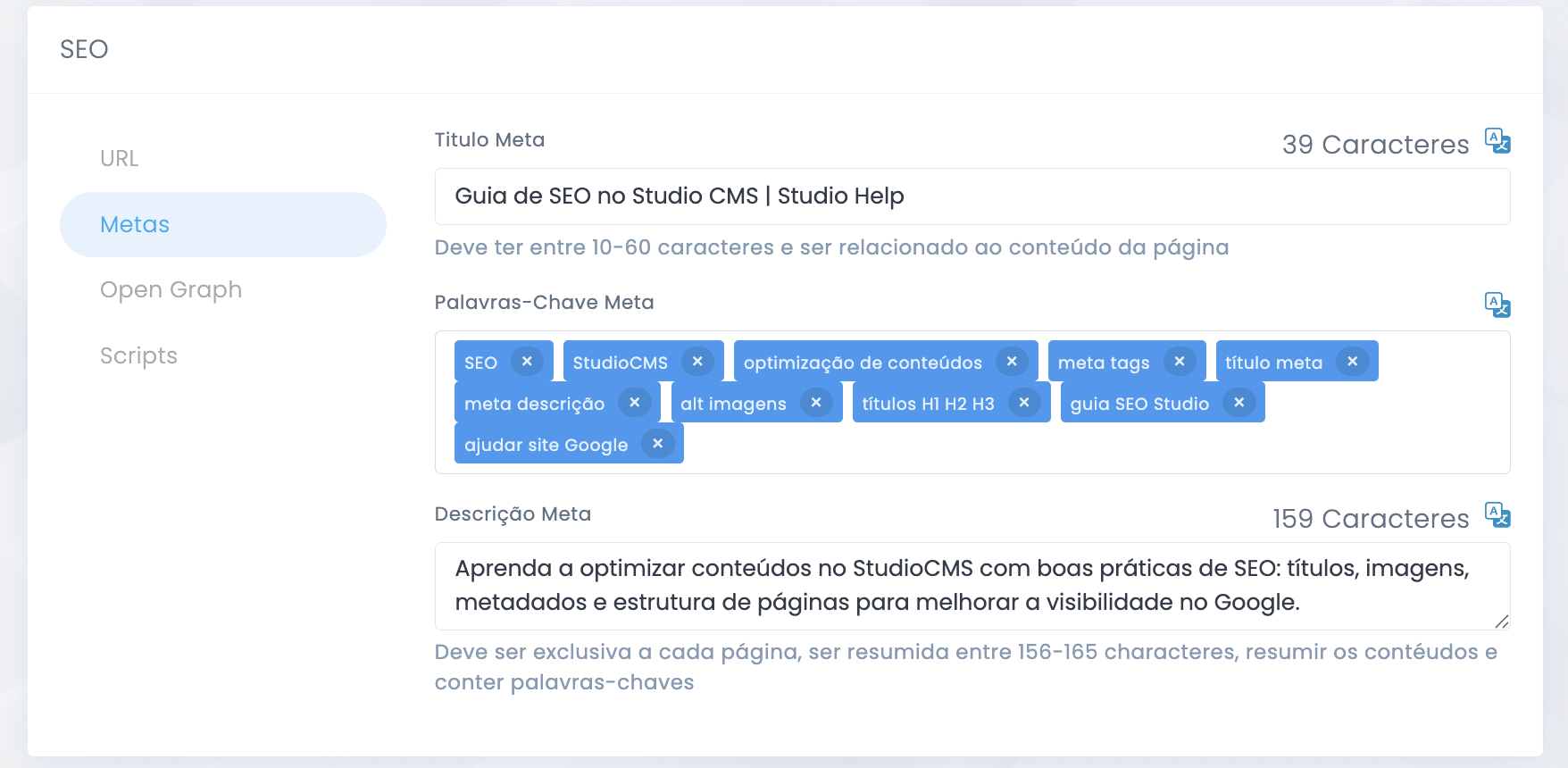
Meta Title
This is the title shown in search results. It should summarize the page content, include the main keyword and remain clear and unique.
Meta Keyword
Today it carries very little direct weight in modern search engines, but it can still be useful for internal organization or additional context.
Meta Description
This is the text displayed below the title in search. It works as a click invitation and should represent the page promise clearly.
Editorial criteria
Metadata should stay aligned with the real page content. Forcing keywords or writing vague descriptions weakens the outcome.
Quick best practices
Length and clarity
- The meta title usually performs best at around 60 characters, keeping the message clear and direct.
- The meta description usually works best at around 165 characters, with contextual and appealing copy.
- Avoid repeating the same title and description across different pages of the website.
- Write for people and not only for search engines: clarity, relevance and specificity remain the most useful factors.
Visual reference
SEO area example
Explore also
Related pages